Digital Edition
Manuel M.
De Andrade

Nov 21, 2025

Another Towman
Struck Down
The Week's Features
Tow truck rescued after dangling off Texas bridge in dramatic recovery.
Billboards may distract drivers—posing hidden dangers on our highways.
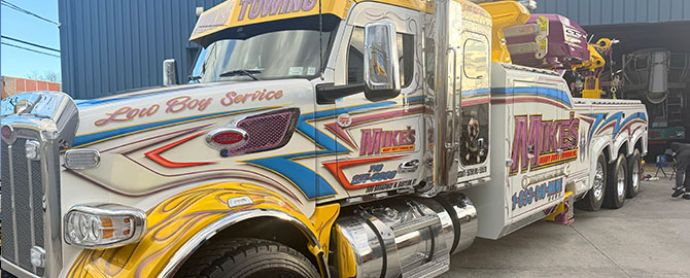
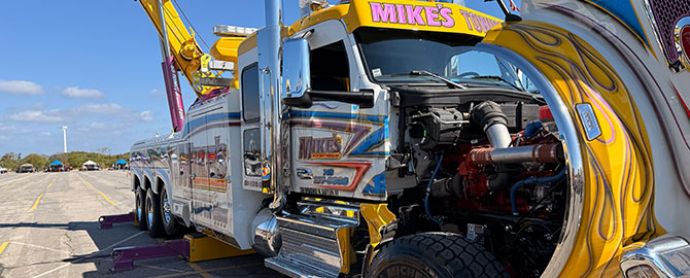
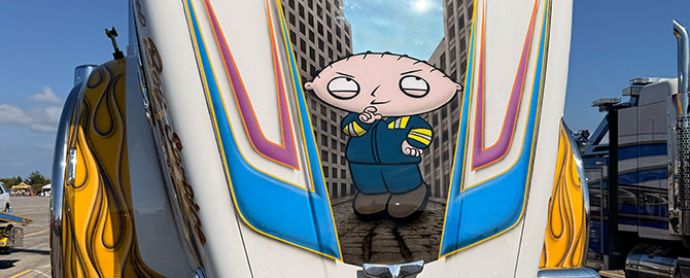
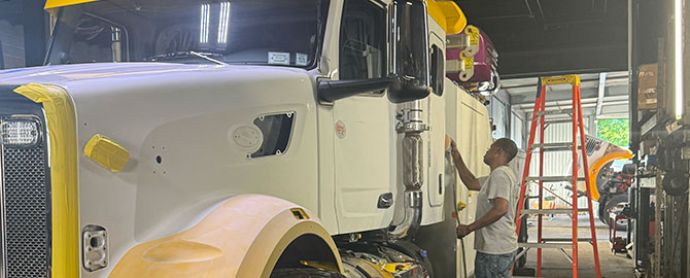
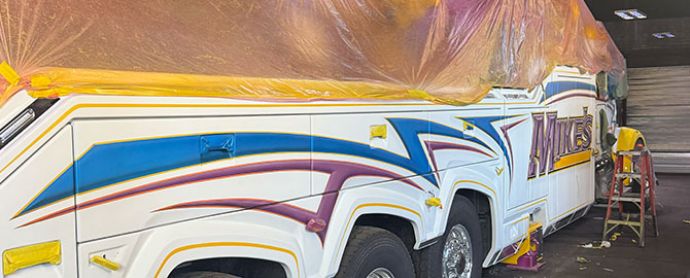
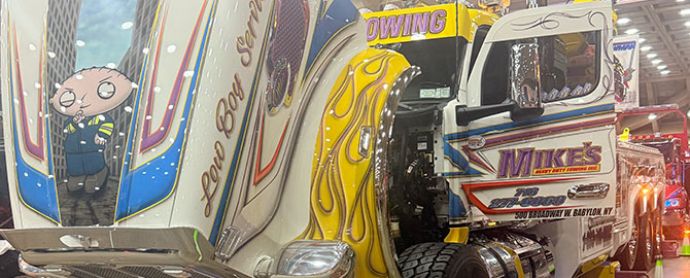
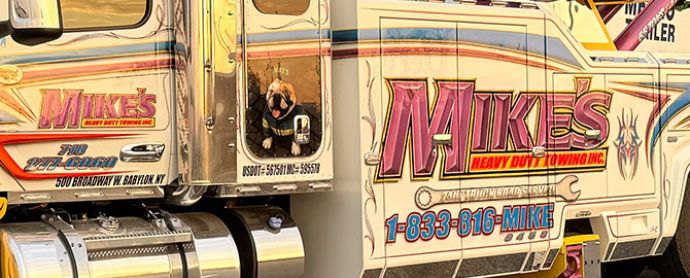
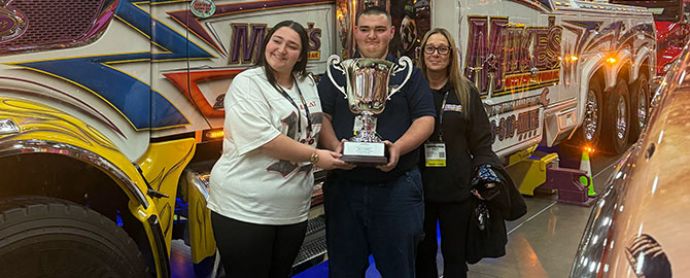
Award-winning NYC rotator blends hand-painted graphics with bold design.
San Diego repo calls surge as auto loan delinquencies hit a 15-year high.
Events
Las Vegas, NV.
April 22-24, 2026
San Antonio, TX.
July 16-18, 2026
Baltimore, MD.
Nov. 19-21, 2026
XPO Magazine Digital Edition
Premiere of "Home of the Brave" with lyrics • Click here to play
American Towman Magazine Presents the Week in Towing May 06 - May 12, 2026

Tow Company Owner Killing Trial Opens in Alabama

The murder trial of a man accused of killing a tow company owner during a 2023 repossession began Monday with jury selection and opening testimony.

Prosecutors say Warren Siao shot and killed tow operator Jayson Click during an attempted repossession. Before proceedings began, a judge denied a defense pretrial motion, and a fire drill briefly delayed the morning session. A 14-member jury—10 men and four women, including two alternates—was seated after lunch.

The state’s first witness, Click’s wife Ann, testified that her husband used a camera-equipped “spotter car” to locate vehicles with repo orders before calling in a tow truck. Jurors heard multiple 9-1-1 calls, including two from Siao, who said he fired shots to “scare them off.”

Tow driver Bill Irwin testified he located the vehicle, rang the doorbell, and began the tow with the garage already open. Video footage showed Click guiding the process. Irwin said gunfire erupted just as they were finishing.

The day ended with body camera footage. Testimony resumes Tuesday.

Source: https://www.yahoo.com/


American Towman Today - May 07, 2026
Click here to read more

Connecticut Tightens Towing Sale Rules

A bill that could significantly impact towing operations has passed the Connecticut Senate and now awaits final approval from Gov. Ned Lamont.

The legislation follows reporting by The Connecticut Mirror and ProPublica that criticized existing towing laws as favoring towers, particularly in cases involving low-value vehicles.

Under Senate Bill 413, towing companies will face tighter restrictions on when they can sell unclaimed vehicles. Units must now be at least 15 years old and held for a minimum of 30 days before a sale can proceed. Previously, some vehicles could be processed in as little as 15 days, allowing for faster turnover.

For operators, that means longer storage times, increased lot management considerations, and potential cash flow impacts tied to delayed disposals.

Lawmakers say the goal is to create a more balanced system between consumers and towing providers, but the change will likely require adjustments in how companies handle unclaimed vehicles and fee structures.

The bill also mandates a new DMV-run online portal, which could streamline vehicle location for owners—but may also reduce the number of vehicles that ultimately go unclaimed.

Source:https://www.newsfromthestates.com


Warbird on Wheels

warbird1 0071f
By George L. Nitti

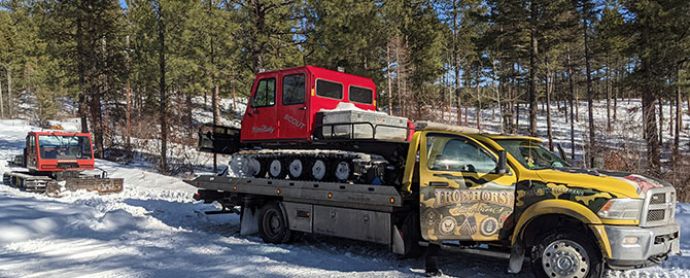
By any standard, it’s a tow truck. But one look at the front end, and you realize it’s something else entirely.

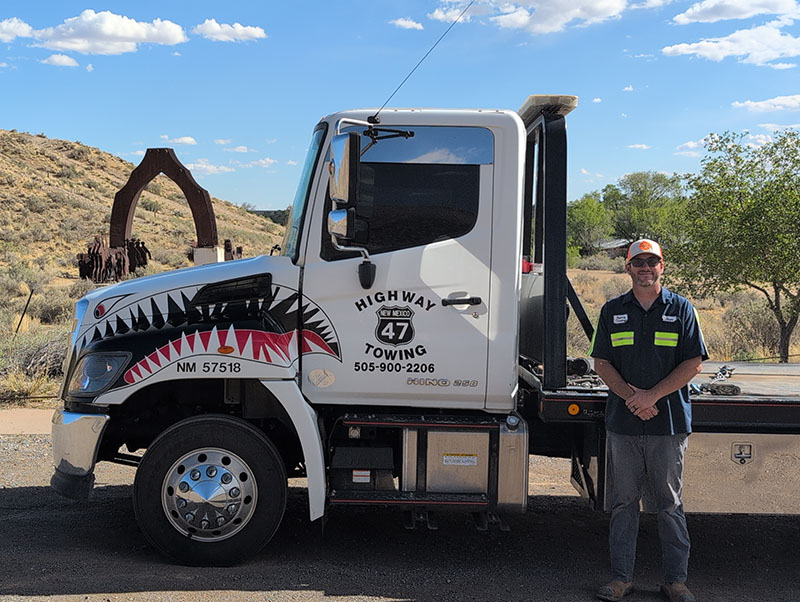
The white 2017 Hino with a Century flatbed, owned by Marc Parmentier of Highway Towing Inc., doesn’t just roll up to a job—it arrives with attitude. Across the hood and grille, a set of jagged shark teeth stretches wide, unmistakably inspired by the nose art of World War II fighter planes.

“It’s modeled after the war fighter planes,” Parmentier said. “That World War II era—the bombers, the pin-up style—I’ve always liked it. My grandpa was in the Korean War, so I’ve always had an appreciation for that generation and that look.”

Parmentier added, “The shark mouth on the Hino was painted by a local hot rod restoration shop.”

The aggressive front-end artwork contrasts with the clean, professional branding on the door—“Highway Towing”—a deliberate choice that reflects both personality and practicality.

“I kept it generic in case I ever wanted to sell,” Parmentier explained. The “47” in the logo traces back to Highway 47, near where the business first started—a quiet rural road that now serves as a reminder of the company’s roots.

Parmentier started his business about seven years ago, transitioning from auto salvage into towing at the urging of friends—and with a push from his wife. Today, he operates out of Belen and Los Lunas, New Mexico, about 30 miles south of Albuquerque.

While towing has grown into a significant part of the business, Parmentier admits he still has a soft spot for salvage. “No one complains in salvage,” he joked. “You can throw a car in the crusher and that’s it.” Towing, on the other hand, comes with its share of challenges—particularly regulations and inconsistent enforcement that can complicate day-to-day operations.

And on the long stretches of Highway 47, where breakdowns and bad days are part of the landscape, Parmentier’s truck shows up ready for both—bringing a little history, a little grit, and just enough bite to get the job done.

By Don Lomax
Click to enlarge


Managing Editor: George Nitti
ATTV Editor & Anchor: Emily Oz
Advertising Sales (800-732-3869):
Dennie Ortiz x213
Site Progr., Graphics & Video: Ryan Oser
Operations Editor: Randall C. Resch
Tow Business Editor: Brian J. Riker
Tow Illustrated Editor: George L. Nitti
May 06 - May 12, 2026
  • Tow Company Owner Killing Trial Opens in Alabama

    The murder trial of a man accused of killing a tow company owner during a 2023 repossession began Monday with jury selection and opening testimony.

    Prosecutors say Warren Siao shot and killed tow operator Jayson Click during an attempted repossession. Before proceedings began, a judge denied a defense pretrial motion, and a fire drill briefly delayed the morning session. A 14-member jury—10 men and four women, including two alternates—was seated after lunch.

    The state’s first witness, Click’s wife Ann, testified that her husband used a camera-equipped “spotter car” to locate vehicles with repo orders before calling in a tow truck. Jurors heard multiple 9-1-1 calls, including two from Siao, who said he fired shots to “scare them off.”

    Tow driver Bill Irwin testified he located the vehicle, rang the doorbell, and began the tow with the garage already open. Video footage showed Click guiding the process. Irwin said gunfire erupted just as they were finishing.

    The day ended with body camera footage. Testimony resumes Tuesday.

    Source: https://www.yahoo.com/

     
  • Pair charged after towing company trespass

    Two people are facing charges after repeatedly returning to a Lewisburg, Pennsylvania towing company in an effort to reclaim an impounded vehicle, police said.

    Hannah Elizabeth Schaeffer, 21, and Ryan Lundy Watkins, 28, were charged following multiple incidents at Buck’s Towing on Sept. 11. Charges were filed April 10 through the office of District Judge Jeffrey A. Rowe.

    According to an affidavit by Officer Cole Wirt, the vehicle had been impounded earlier that day after a traffic stop revealed marijuana, expired registration, and illegal window tint. Watkins, who was driving, was arrested on suspicion of DUI.

    Later that day, police responded to a disturbance at the towing company, where the pair demanded their vehicle and were told to leave. Despite acknowledging the warning, they returned twice more over several hours, each time causing further disruption, police said.

    Officers eventually arrested both for trespassing. A search of Watkins’ backpack uncovered marijuana, and a subsequent vehicle search revealed a loaded 9mm handgun.

    Both face multiple misdemeanor charges.

    Source: https://www.northcentralpa.com

     
  • American Towman ShowPlace – Las Vegas Scores Solid Turnout

    The recently concluded American Towman ShowPlace – Las Vegas was a big hit as attendees and exhibitors filled the South Point Hotel Exhibit Hall & Arena.

    Towing and emergency road service industry professionals comprised of more than 80% of the 5,000 attendees and suppliers who flocked to the South Point Resort Hotel Exhibit Hall & Arena for the 13th edition of the show.

    A total of 4,087 Tow Bosses viewed products and services from 175 vendors – a show record for exhibiting companies in addition to a record sales staff of 855 company representatives.

    “It is testimony to the solid reputation the show has amongst its participants, especially from the West Coast,” said Henri “Doc” Calitri, president of A.T. Expo Corp., the show producer. “California led all states in being represented with 48% of the audience. We have also seen a growth of attendees traveling to Las Vegas from all points of the country as well as international travelers from as far away as Australia and Japan.”

    AT ShowPlace is one of the towing industry’s premier trade events, second only to the American Towman Exposition in Baltimore, the world’s largest towing show held every third week in November.

    The show was highlighted by the USA Wrecker Pageant which saw tow trucks compete for trophies in a variety of categories that came from as far away as Alaska and North Dakota.  Welcome Night festivities included a recovery demonstration by WreckMaster, a gala buffet attended by almost 400 persons, and an awards dinner hosted by the California Tow Truck Association (CTTA) that featured entertainment by the renowned Felix and Fingers dueling pianos.

    AT ShowPlace is a testimony to the strength of American Towman Magazine which is the prime sponsor of the event and the industry’s leading monthly trade publication.

    “We are already planning on making the 2027 American Towman ShowPlace – Las Vegas even bigger and better than ever. Stay tuned for those announcements,” said Calitri.

    Dates for the 2027 show are April 22 & 23 at the South Point Hotel Exhibit Hall & Arena.

     
  • Tow Truck Driver Rescues Moose From Ice

    A Saskatchewan tow truck driver says a routine afternoon call turned into an unexpected wildlife rescue when he pulled a moose from icy water and brought it home to recover.

    Clint Gottinger, owner of Rebel Towing near Kelvington, was headed to two jobs around 5 p.m. CST last Saturday when he spotted the animal trapped in ice about 200 kilometres east of Saskatoon.

    He said he immediately turned around, deciding the rescue took priority over his scheduled calls.

    “I can’t leave him. Everyone has to wait. This is a priority,” Gottinger said.

    Using his tow truck’s tilted deck and a soft sling, Gottinger and nearby residents worked together to pull the exhausted moose free.

    The animal was loaded onto the truck and transported to his home, where Gottinger called his wife to bring blankets.

    She rushed outside as he arrived, helping cover the moose while it rested on their deck overnight.

    Gottinger said the moose regained strength and stood by later that evening, remaining near the property through Sunday before walking off Monday morning.

    Source: https://www.cbc.ca/

     
  • After Towman Fatally Shot, Man Charged with Murder

    A Kansas City man has been charged in the fatal shooting of a tow truck driver. Josue Ceniceros-Angel faces charges of second-degree murder, armed criminal action, and unlawful use of a weapon in Jackson County.

    Police say the shooting occurred just after noon on April 12 where officers found a black Ford F-250 tow truck partially on a curb, its driver suffering from a gunshot wound to the torso. The victim, identified as 51-year-old Marcus Gammage, was transported to a hospital, where he later died.

    Witnesses reported seeing a black Mercedes arrive at the scene, with three men approaching the tow truck before a tense encounter. Two fled in the vehicle, while another left on foot.

    Investigators believe Gammage was attempting to tow a vehicle linked to Ceniceros-Angel. Police later found shell casings at his residence. He initially denied firing a weapon but was taken into custody on April 16. A warrant was issued with a $100,000 cash-only bond. No court date has been set.

    Source: https://www.kansascity.com/

     
  • Tennessee Towman Stops Knife Attack

    Tow owner Tony Cate became an unlikely hero during a violent incident Tuesday morning, April 21, 2026, in Jefferson City, Tennessee, stepping in to stop a knife-wielding attacker and protect a longtime friend.

    Cate, owner of TNT Towing was at Lakeview Market—part of a routine he says he’s followed “almost every morning for 20 years”—when he heard a commotion at the front of the store. Within moments, a woman moved behind the counter into the deli area, holding what Cate described as a large knife, possibly 18 inches or longer.

    Realizing the seriousness of the situation, Cate didn’t hesitate. “It was all or nothing,” he said. He rushed behind the counter just as deli manager Christie Sims struggled to keep the attacker from driving the blade into her stomach. Cate grabbed the suspect, disarmed her, and forced her to the ground, holding her there until police arrived.

    Cate, who has worked in the towing industry since 1988 and has operated his own business since 1991, downplayed his actions. Sims strongly disagrees, crediting him with saving her life. Thanks to his quick response, no one inside the store suffered serious injuries.


    Source: https://www.yahoo.com/

     
homediv homediv homediv tow411
homediv
Rate how they handled this recovery
Great job on a challenging recovery.
Hit all the basics on this one. Thumbs up.
Creative approach on this recovery. Good job.
I would approach this recovery differently.
Vehicle(s) could be rigged more efficiently.
More trucks were needed.
May 06 - May 12, 2026
  • Whiteout on the Divide: Inside Colorado’s I-70 Chain-Reaction Pileup

    i 70 7 57786
    By George L. Nitti

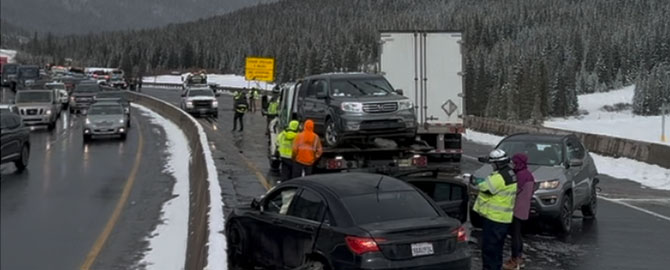
    On the afternoon of April 14, what began as a spring drive along Interstate 70 turned into a sudden, disorienting disaster just east of the Eisenhower–Johnson Memorial Tunnel.

    At approximately 2:50 p.m., drivers exiting the tunnel on the eastbound side were met with a dramatic and dangerous shift in conditions. “On the west side, roads were just wet,” said Charlie Stubblefield, owner of Mountain Towing & Recovery. “But the moment you came out the other side—it was instant whiteout. Ice, snow… you could barely stand up.”

    The abrupt transition proved catastrophic. Vehicles traveling at highway speeds encountered a gradual curve and lost control almost immediately. Within moments, a chain reaction unfolded. “Boom, boom, boom—it just stacks up,” Stubblefield said. By the time authorities shut down the tunnel, an estimated 78 vehicles had been caught in the pileup.

    Remarkably, there were no fatalities, and reported injuries were minor, a fact Stubblefield still finds extraordinary given the damage. “Some vehicles were crushed beyond recognition,” he said, recalling a mangled pickup discovered only after another SUV was removed.

    Mountain Towing & Recovery, based about 11 miles away in Silverthorne, had crews already patrolling due to the incoming weather. Two units arrived within a minute. Soon, a coordinated response involving multiple towing companies, the Colorado State Patrol, and other agencies was underway.

    Serving as incident commander, Stubblefield oversaw the complex task of clearing the interstate. Four heavy wreckers, seven rollback trucks, and additional support vehicles worked in unison to untangle and remove wreckage. Vehicles were transported to a staging area at Loveland Ski Area, where documentation could continue off the highway.

    But clearing the road was only the beginning.

    In the days that followed, Stubblefield’s team faced an avalanche of logistical challenges such as tracking vehicles, assisting displaced drivers, and coordinating with insurance companies. “You’re repainting the picture over and over,” he said. “Explaining what happened, why it took what it took.”

    For Stubblefield, the takeaway is simple: “Give each other space. Look beyond the car in front of you. A lot of these pileups can be avoided.”

     
  • Hanging on Ice: High-Risk Bridge Rescue 

    image0000041 2 baf22
    By George L. Nitti 

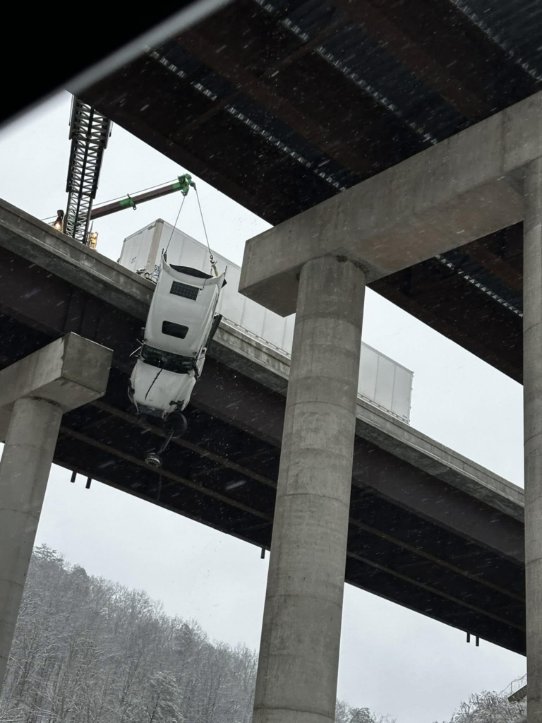
    It was very early morning on December 2 when the call came in—a tractor trailer had jack-knifed on an icy bridge in Southside,  West Virginia and was hanging over the edge.

    The rig had been traveling in near-zero temperatures when it hit a slick patch of roadway. The driver lost control, the trailer swung, and the entire combination folded into a jackknife before slamming into the bridge rail. From there, it didn’t stop. The truck slid roughly 200 yards along the icy span, grinding against the barrier until it came to rest in a terrifying position—partially suspended over a drop of approximately 75 feet.

    Within minutes, emergency responders were faced with a serious scene: a fully loaded tractor trailer, unstable footing on ice, and a driver trapped in the cab.

    High Road Towing and Truck Repair out of Bidwell, Ohio, was dispatched on rotation. The distance from their facility was roughly 20 miles. By the time crews arrived, multiple fire departments were already on site. In total, between fire companies, law enforcement, hazmat, and recovery personnel, nearly a dozen agencies would eventually be involved.

    High Road brought in heavy equipment immediately: a 50-ton NRC rotator mounted on a 2011 Western Star and a 35-ton Jerr-Dan with SRS on a 2014 Kenworth T880. But before any lifting could happen, the situation demanded stabilization of the hanging truck cab.  

    The driver was alert and oriented. With the cab in a precarious position and the trailer’s weight still shifting on ice, the team worked carefully with the help of the driver, to thread a stabilization strap through the truck’s windows as crews secured the vehicle to prevent any further movement.

    Conditions were frigid. The temperature hovered around 20 degrees, while the ice surrounding the recovery scene was treacherous. A thin layer of snow covered the bridge surface, masking the slick conditions underneath. Every step taken by personnel near the edge carried risk. One slip could have meant going over the bridge rail and falling into the ravine below.

    “It was five and a half hours just stabilizing that hanging chassis and getting the driver out,” said Tim Brabham, owner of High Road.

    Once the driver was safely removed, the focus shifted to the freight and the vehicle itself. The trailer carried approximately 44,000 pounds of cargo—bricks, banded but not on pallets—which had shifted heavily to one side during the incident. 

    Before the truck could be recovered, crews had to correct the internal load distribution. Only after the cargo was stabilized did they begin separating the trailer from the tractor. With the trailer finally pulled clear and moved out of the immediate work zone, enough space was created to address the remaining truck section.

    Then came the lift.

    Using the rotator in conjunction with the SRS 35, crews carefully raised the tractor unit from its angled, exposed position. Slowly, inch by inch, the truck was brought back over the bridge rail and returned to level ground. From there, it was loaded onto a low-profile Landoll 835 trailer for transport out of the scene.

    But the job wasn’t over.

    A significant fuel spill had occurred beneath the bridge and into a nearby creek. Hazmat crews responded immediately, and cleanup operations stretched well beyond the initial recovery window. In fact, environmental remediation continued for days afterward, with final clearance taking weeks to complete.

    In total, the on-scene recovery operation lasted approximately 12 hours before the roadway could be fully reopened. Around 30 operators and support personnel were involved across recovery, fire, and environmental response teams.

    For High Road Towing and the many agencies involved, the job illustrated the high-risk nature of towing operations when weather, terrain, and timing collide.

    Brabham said, “Be prepared for anything, but always remember,  Safety comes first,” and further noted that “situational awareness” was critical, especially on icy structures where a single misstep could have turned a recovery into a tragedy.

     
  • A Test of Patience: A 17-Hour Recovery on the 60 Freeway

    storycovery d4087

    By George L. Nitti

    In the early morning darkness along Southern California’s 60 Freeway, a fully loaded 53-foot tractor-trailer lay crumpled down an embankment - its cargo loose, its structure failing, and its driver the victim of a hit-and-run involving a reportedly stolen vehicle.

    “We got the call around one or two in the morning,” recalled Ruben Gonzalez, who led the operation alongside his father, also named Ruben, with brother Michael first on scene. “It was already over the side, fully loaded, but we knew we didn’t want to unload it down there.” 

    Instead, the team committed to recovering the trailer intact. 

    Deploying two rotators and two wreckers—a 35-ton Miller 7035 and a 50-ton Century—they began a careful, coordinated lift. The rotators worked in tandem, “one holding while the other repositioned,” Gonzalez explained. “We probably reset four or five times.” Meanwhile, the wreckers winched from above, stabilizing the rear as the trailer crept upward. 

    The situation was complicated by rain and poor footing. “We couldn’t really spike on the highway,” Gonzalez said. “The wreckers were sliding back as we were winching. We just kept pulling little by little.” 

    Inside the trailer, the cargo posed another challenge. “It wasn’t palletized—just loose boxes,” he said. “The walls were already compromised. Keeping everything from spilling out was the hardest part.” 

    By the time the trailer reached the top, it had buckled under stress. Six large liquid-filled totes—some of the heaviest cargo—had to be removed through the torn roof using a rotator. “We had to lift them straight out,” Gonzalez noted. “There was no other way.” 

    Rigging required constant adjustment. Gonzalez added multiple hard lines and even quadrupled the winch lines to distribute force and protect the trailer’s weakened frame. “We ran lines to both the tractor and trailer to get more coverage underneath,” he said. 

    After nearly 17 hours in the rain, inching the load up the embankment while their own trucks fought for traction on the wet freeway, the recovery finally came together. Every reset, every adjustment, every pull was calculated to keep the trailer intact and the scene under control. 

    “We just kept pulling it little by little until it came up,” Gonzalez said. 

    Once upright, the team offloaded the remaining cargo, separated a torn axle for transport, and hauled the damaged tractor and buckled trailer in stages.  

    By the time the last of the cargo was cleared and the damaged equipment hauled away, the job stood as a reminder of the patience required to see things through to the end. 

     
May 06 - May 12, 2026
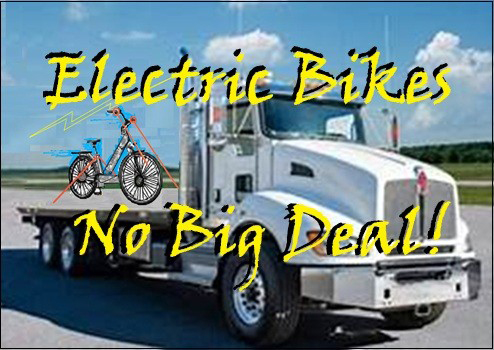
  • Electric Bikes – No Big Deal

    Electric Bikes PIC 98a36
    By Randall C. Resch

    They’re the rage ’round the world—they’re everywhere! Unlike short-lived “electric scooters,” e-bikes cater to all ages for fun and no-effort sport. Recently, their popularity has resulted in increased police interaction, especially where vehicle code laws make them illegal. The problem is, e-bikes (in most states) are classified as “motor vehicles,” thus requiring driver’s licenses to operate them.

    I’m an e-bike freak and often read about these high-dollar bikes that have taken the world by storm. Attractive to all age groups, you see them blasting down sidewalks, running lights at intersections, and jutting into traffic—oftentimes without warning. Especially attractive to parents, school-aged kids no longer have to be driven to school, nor do parents have to take them. Because they’re electric, they’re a “sit-atop machine” that doesn’t require “people power,” lending to a certain laziness and the creation of a community of unfit people.

    Call it “stupid money”—one brand of e-bike is carbon fiber, lightweight, and capable of 60 miles per hour. These little zippers are state-of-the-art, and if you’re really dumb, the Aurumania Gold Edition boasts a $114,000 price tag—if it fits yer’ style. Ya’ can’t make this stuff up! This limited-edition e-bike features a gold-plated frame reportedly adorned with hundreds of Swarovski rhinestones, a marketing ploy attracting riders who roll in true bling style. Not in a bazillion years would most towers be able to afford a luxury machine like this, yet it’s satisfying to know just how good they look atop a carrier headed to a tow yard—with all those rhinestones blingin’ in the sun.

    Kids and adults ride these tiny machines that are difficult to see, contributing to a rise in rider-versus-vehicle fatalities. Case in point: In May 2025, in Jacksonville, Florida, a tower was making an inner-city right turn when the tow truck “crossed the path” of an adult e-bike rider. The rider was killed instantly; she was not wearing a helmet. Towers, be on extra alert—these e-bikes are in the streets and on sidewalks, riding willy-nilly with no regard for traffic safety. Vehicles and e-bikes don’t mesh!

    How It’s Done

    I watched a carrier operator load an e-bike atop a light-duty Pete one Saturday afternoon at the beach. The bike’s rider had been arrested for DUI, and the bike was being impounded. The tower’s process was slow and calculated—I was impressed by his skills. As the officer wrote the impound report, I found myself entertained by his actions as he retrieved a blanket from behind the truck’s seat. While preparing the e-bike in an upright load position, he strategically positioned the blanket to protect the bike from scratches.

    Although securing an e-bike is similar to securing a motorcycle, without knowing anyone was watching him, he demonstrated real “wow factor,” doing an outstanding job. While experienced towers have tricks up their sleeves when loading motorcycles and the like, let this narrative serve as instruction for beginners considering these get-it-done techniques:

    -- If an “e-bike” is noted in police dispatch instructions, send an experienced operator with a carrier
    -- On arrival, set the tow truck’s e-brake; chock tire(s) to prevent rollaway
    -- Equip the tow truck with a thick furniture-loading blanket for padding
    -- Have ready motorcycle ratchet straps and soft cycle loops for tie-down
    -- Tilt and set the carrier deck solidly to the pavement
    -- With care not to slip and fall, roll the e-bike forward and center it against the winch fairlead roller
    -- Pad and protect the e-bike at contact points to avoid strap chafing
    -- Never use the tow winch for tie-down purposes
    -- At destination, off-load using the same care and safety
    -- Never allow the rider or owner onto a tilted carrier deck
    -- E-bikes use lithium-ion, sodium-ion, or solid-state batteries; determine a safe storage location and consider fire risk
    -- Release only according to vehicle code law and agency procedures

    Stand By for Flak

    Who knows if the laws will change, making these legal for recreational cruising? Until then, they’ll continue winding up on tow trucks headed to impound yards. Nonetheless, law enforcement is already chasing these e-bikes through inner-city streets, using newly enacted vehicle code sections to enforce impounds. If the rider is a juvenile, e-bikes can be impounded and held until released to a licensed driver.

    With the “e-bike mentality” comes a sense of entitlement—suggesting rates charged for towing should be lower: “Towing an e-bike shouldn’t cost as much as towing a car.” Rest assured, e-bike owners will create headaches at the release window, especially when a “hold for release” is required by the impounding agency. Another question remains: How is a lien sale applied to e-bikes that aren’t promptly picked up?

    For towers who think e-bikes are the same as a regular, good old schoolyard Schwinn—think again! These little buggers are easily damaged if operators aren’t careful during the load-and-go process. Since it’s rare (if ever) that an e-bike is impounded off the highway, take your time—work slowly and methodically to prevent damage.

    Personally, the bigger picture says this: treat every load—or “e-bike dangle”—with total care, as if it were an irreplaceable, original, all-aluminum 1952 Aston Martin DB2. You bend it, you buy it!

    Operations Editor Randall C. Resch is a retired, veteran, California police officer, former tow business owner and industry advocate. As consultant and trainer, he authored and teaches tow truck operator safety courses approved by the California Highway Patrol. For 57-years, he has been involved in the towing and recovery industry. In 29-years, he has contributed more than 800-safety focused articles for American Towman Magazine, TowIndustryWeek.com and POLICE Magazine. He is a frequent seminar presenter and beauty pageant judge at tow shows. In 2014, he was inducted to the International Towing and Recovery Industry Hall of Fame, was the 3rd recipient of the industry's "Dave Jones Leadership Award," and is a member of American Towman’s Safety Committee.

    Email Randy at rreschran@gmail.com.

     
  • Disqualified Tow Operators?

    disqualified3 99746
    By Randall C. Resch

    A tower’s “colorful criminal history” may be permanently disqualifying. So, what actually disqualifies a tow operator with a questionable background?

    There are many tow applicants with histories that include violent crimes or other offenses that raise serious concerns. For this reason, when tow companies apply for—or renew—rotation privileges, both operators and dispatchers are required to submit applications to the contracting agency. In some cases, the result is a permanent disqualification.

    Law enforcement agencies have a responsibility to prevent individuals convicted of serious crimes from being placed in positions of public trust. These typically include violent offenses such as homicide, robbery, assault, auto theft, and drug-related violations.

    Tow owners carry a similar responsibility. They must conduct background checks to determine whether an applicant is fit to serve the motoring public and whether they meet the standard of “moral turpitude.”

    Moral turpitude refers to conduct that is contrary to accepted community standards of honesty, integrity, and decency. In practical terms, the question becomes: is this someone the tow owner trusts to operate expensive equipment while representing the company with professionalism and integrity?

    And just as importantly, how would the public feel knowing that a convicted felon with a violent history—or even a sexual offense—has been dispatched to assist a stranded family?

    Full Disclosure Required

    Hiring qualified personnel is one of the most challenging responsibilities in tow management, especially when building a roster or meeting rotation contract requirements. While most contracts do not dictate exact staffing numbers, companies must still ensure they have enough qualified operators and dispatchers to handle spikes in call volume.

    Agency policies vary, but applicants are typically required to complete a detailed Driver Information Form. This includes disclosure of arrests, convictions, and in some cases even juvenile contacts. Once completed, the form is submitted to the “tow boss” or reviewing agency for evaluation.

    For example, in California, highway patrol rotation companies must complete a specific operator form that is cross-checked against a list of disqualifying offenses. The agency reviews whether the applicant has been truthful and whether any part of their history falls under permanent or temporary disqualification guidelines.

    In general, agencies maintain a structured system that identifies:

    -- Certain felony convictions that result in permanent disqualification

    -- Other serious offenses that may lead to suspension or multi-year exclusion

    -- A history of repeated DUI offenses, which can also disqualify an applicant

    -- Crimes involving violence, theft, fraud, child endangerment, or evading law enforcement

    While the specifics vary, the intent is consistent: protect the motoring public and maintain trust in the rotation system.

    Company Diligence

    Hiring tow operators and dispatch personnel is never simple when applicants have questionable pasts. These guidelines exist to help companies avoid placing unqualified individuals in positions of public responsibility.

    Owners must remember that failing to conduct proper background investigations can damage both the company’s reputation and public trust if something goes wrong.

    Most applications require full disclosure of any criminal history, and honesty is critical. Providing false information to law enforcement agencies—whether verbally or in writing—can itself be a criminal offense.

    In addition to the application, fingerprint-based background checks are often conducted through systems such as LiveScan and national databases. When an applicant’s record is reviewed, any undisclosed convictions or disqualifying offenses typically surface.

    It is also important to understand that disqualification from one program does not always prevent employment in other areas of the towing industry. However, the responsibility for careful hiring decisions always rests with the company.

    In the end, due diligence in hiring is not optional—it is essential to maintaining integrity, safety, and professionalism in the towing industry.


  • Dollies Don't Walk

    Dolly with Lock PIC copy 01929
    By Randall C. Resch

    Confucius say, “Grasshoppa’, wrecka’ dollies might roll, yet they don’t walk!” This sentiment comes from another dismayed tower complaining a set of dollies were stolen off his wrecker. As our conversation progressed, he openly admitted he didn’t check to see if they were locked—and wasn’t sure how to handle his irate owner’s wrath.

    Label me funny, but tow company procedures should require operators to make it standard practice to ensure dollies are locked after every use. So, what requirements should owners mandate to make personnel responsible for securing equipment?

    When it comes to locked and secured dollies, every devil’s advocate suggests there’s no stopping determined thieves working under cover of darkness armed with a mini-Sawzall—but why cut when you can just lift and walk away?

    Call the Cops

    Losing dolly equipment off trucks isn’t new. Even a rocket scientist can recognize that “anything not tied down, locked, bolted in, or secured in place is easy taking.” From an investigator’s viewpoint, consider:

    • Were dollies stolen—or was something else at play?
    • Were they not locked or secured atop the wrecker’s stowage bracket?
    • Were dolly bunks left unsecured, allowing easy liberation?
    • Did unsecured dollies “bounce and launch” from trucks in traffic?
    • Did a competitor help themselves to stock their trucks?
    • Did a thief swipe a set and post it for sale online?
    • Did an employee take them while outfitting a new truck?
    • Or is a fraudulent insurance claim in the making?

    What About Liability?

    Imagine motorists traveling at highway speed when a tow truck drops a dolly rack into traffic, forcing vehicles to swerve. What liability exists when investigation proves the rack wasn’t secured?

    Consider two real-world incidents:

    A suicidal driver struck a parked Ford F-450 wrecker providing flat-tire service on a Southern California highway. At the end of the job, the tower sat in the passenger seat writing an invoice. The motorist, standing outside the open door, was struck across the face by an unsecured dolly rack. Fortunately, she survived.

    In another case, a dolly rack ejected from a moving wrecker and landed beneath a following car. The vehicle skidded atop the rack, grinding to a stop in a shower of sparks. The rack punctured the gas tank, igniting the underside. If not for the quick actions of an off-duty police officer and another motorist, the driver and her son might have been burned alive.

    Security Measures

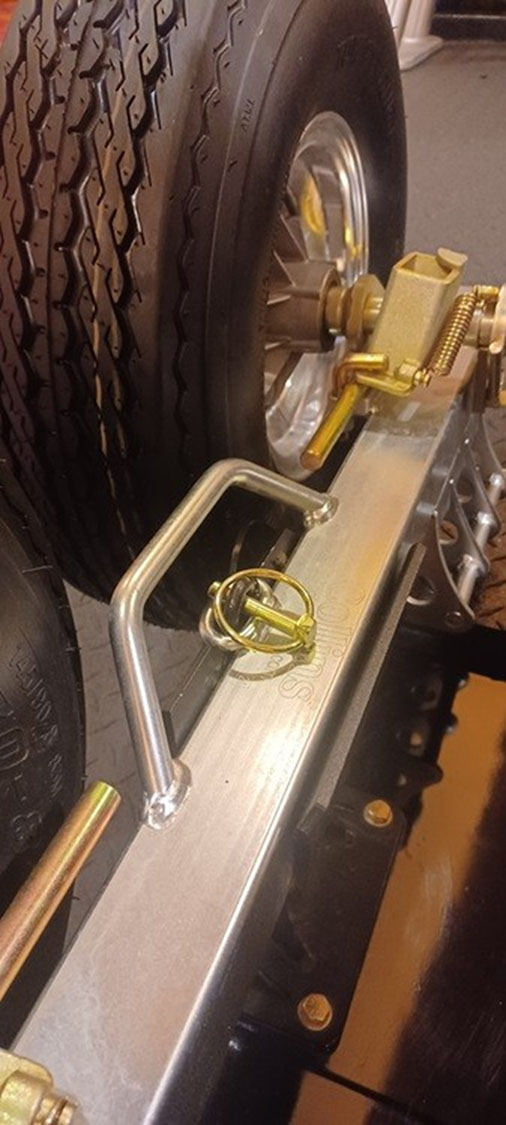
    Tow owners attending shows should take a hard look at dolly rack locks. Too often, setups rely on flimsy metal loops and small locks—or simple slip pins—to secure racks.

    Only a few dolly lock mounts offer superior security, and they come at a cost. Whether purchasing new equipment or evaluating existing setups, owners should think in terms of “good, better, best” security. Nothing says you can’t fabricate better securement points—but they’re only effective if used.

    Engrave your company name and ID number in inconspicuous places, or paint racks distinct colors. If theft occurs, provide identifying details in your report—and monitor online marketplaces like Craigslist, Facebook Marketplace, and industry sites. If stolen dollies appear, notify law enforcement immediately.

    A company’s PPM should clearly outline operator responsibility for securing dollies. When dollies go missing and weren’t locked, it becomes an employee and management issue.

    Sticker Shock

    If you haven’t priced new dollies lately, brace for sticker shock. A recent ad listed a full set of Collins G7 dollies (crossbars and lift handle) for $2,795. Other sets range from $1,500 to $3,500, not including shipping.

    That’s a hard hit when “an ounce of prevention is worth a pound of cure.”

    When trucks are parked in accessible areas, thieves can simply pull alongside and help themselves. Whether it’s a competitor or someone looking for quick cash, when dollies are stolen, the first question remains:

    Were they locked?


    Operations Editor Randall C. Resch is a retired California police officer, former tow business owner, and industry advocate. As a consultant and trainer, he teaches tow truck operator safety courses approved by the California Highway Patrol. With 55 years in the towing and recovery industry, he has authored more than 800 safety-focused articles and is a frequent seminar presenter. Inducted into the International Towing and Recovery Industry Hall of Fame in 2014, he is also a recipient of the Dave Jones Leadership Award and a member of American Towman’s Safety Committee.
    Email: rreschran@gmail.com

     
homediv
homediv
May 06 - May 12, 2026
  • Warbird on Wheels

    warbird1 0071f
    By George L. Nitti

    By any standard, it’s a tow truck. But one look at the front end, and you realize it’s something else entirely.

    The white 2017 Hino with a Century flatbed, owned by Marc Parmentier of Highway Towing Inc., doesn’t just roll up to a job—it arrives with attitude. Across the hood and grille, a set of jagged shark teeth stretches wide, unmistakably inspired by the nose art of World War II fighter planes.

    “It’s modeled after the war fighter planes,” Parmentier said. “That World War II era—the bombers, the pin-up style—I’ve always liked it. My grandpa was in the Korean War, so I’ve always had an appreciation for that generation and that look.”

    Parmentier added, “The shark mouth on the Hino was painted by a local hot rod restoration shop.”

    The aggressive front-end artwork contrasts with the clean, professional branding on the door—“Highway Towing”—a deliberate choice that reflects both personality and practicality.

    “I kept it generic in case I ever wanted to sell,” Parmentier explained. The “47” in the logo traces back to Highway 47, near where the business first started—a quiet rural road that now serves as a reminder of the company’s roots.

    Parmentier started his business about seven years ago, transitioning from auto salvage into towing at the urging of friends—and with a push from his wife. Today, he operates out of Belen and Los Lunas, New Mexico, about 30 miles south of Albuquerque.

    While towing has grown into a significant part of the business, Parmentier admits he still has a soft spot for salvage. “No one complains in salvage,” he joked. “You can throw a car in the crusher and that’s it.” Towing, on the other hand, comes with its share of challenges—particularly regulations and inconsistent enforcement that can complicate day-to-day operations.

    And on the long stretches of Highway 47, where breakdowns and bad days are part of the landscape, Parmentier’s truck shows up ready for both—bringing a little history, a little grit, and just enough bite to get the job done.

     
  • “One Truck, Two Jobs”: The Power of the Miller Detachable Wrecker  

    wrenchescover a3f39
    By George L. Nitti 

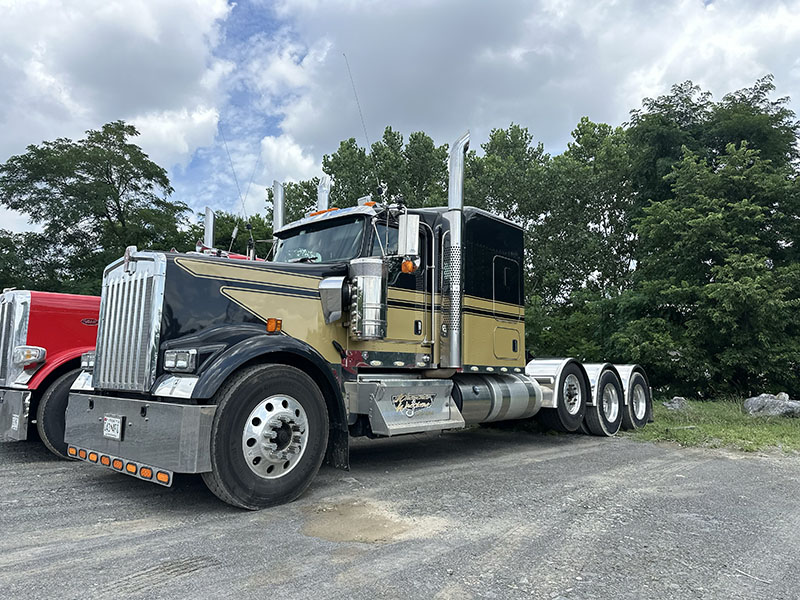
    For Eddie Smith, owner of Wrenches & Wreckers in Hagerstown, Maryland, his 2014 Kenworth W900 outfitted with a Holmes DTU (made by Miller Industries) and Landoll trailer has become a powerhouse of versatility and profit. 

    “It’s equal to a 25-ton wrecker,” Smith said of the detachable unit. “It works really well.” 

    Nicknamed Snowman — a nod to Jerry Reed’s character in Smokey and the Bandit, the truck’s color scheme was inspired by the movie that sparked Smith’s lifelong love for trucks. “I was like six or seven when I saw it. That movie pointed me toward this direction,” he said. 

    Smith spec’d the Kenworth with heavy-duty rears, a double frame, and the same build integrity as a 50-ton wrecker. “That way, we’re able to put a detachable wrecker on it that’s very stable and safe — and not abusive to the truck.” 

    One Truck, Many Jobs 

    What sets this build apart is its ability to transform. “The same guy can come back to the yard, unhook the tow body, and hook to a lowboy trailer to do another job. It turns one truck into two. That’s versatility,” Smith explained. 

    The transition is simple: “It just has legs. You unhook it, unhook the hydraulic lines, and drive out from underneath.” 

    That flexibility translates into real profit. “Back in the day, that truck was averaging $30 a mile,” Smith said. “It was our most profitable truck — even over the rotators. It’s about two-thirds the cost of a rotator and just as stout.” 

    A Niche That Pays 

    Wrenches & Wreckers focuses strictly on heavy-duty towing — no cars. That niche, combined with a smart approach to equipment, gives Smith’s business an edge. He emphasized that the detachable wrecker isn’t for every operator. “Some guys stick it on a regular bobtail tractor, but that doesn’t work the same. You need the right wheelbase, the right frame capacity.” 

    He added, “You see some setups that are Jerry-rigged. That hurts the truck and doesn’t tow well.” 

    And it’s not just about performance. It’s about legality and mobility. “In certain states, if we’re overweight, we’ll get fined. This detachable setup is a lot lighter than a conventional wrecker. We can run it across the country — swap out trucks, do bobtail jobs.” 

    Though not a recovery vehicle per se, the detachable rig includes a 20,000-pound winch — ideal for lighter winch-outs or separating trailers during swap-outs. “It’s not designed as a frontline recovery piece,” Smith said, “but it’s a strong tool for what we do.” 

    So why don’t more companies adopt the model? 

    “Some of it’s ego,” Smith admitted. “Big wreckers are impressive. I have nine of them myself. But this detachable setup — it's the smartest, most versatile truck in our fleet.” 

    For smaller outfits, the detachable option also offers an affordable way in. “The detachable wrecker cost me about $80,000. That’s a lot less than a $450,000 new wrecker. It’s not cheap — just less expensive.” 

    At Wrenches & Wreckers, the investment has paid off — mile after mile. 

     
  • Bold Visibility, Local Identity 

    sadlercover2 dc368
    By George L. Nitti

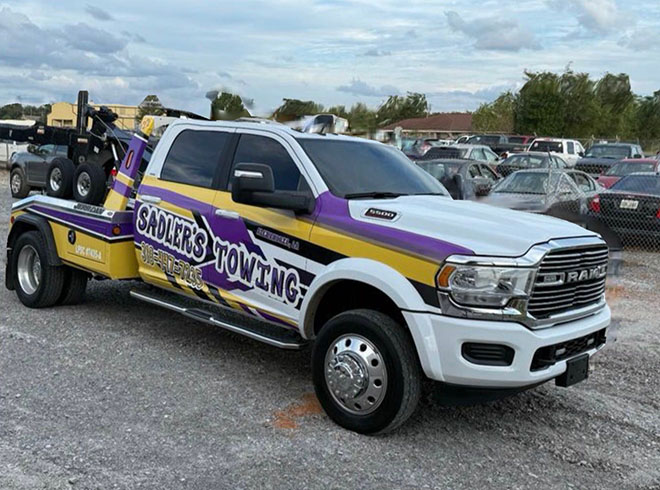
    On a 2023 Ram 5500 equipped with a Jerr-Dan MPL-40, Sadler’s Towing, located in Alexandria, Louisiana, has turned a functional work truck into a rolling billboard built for visibility and recognition. 

    Owner Kevin Sadler, who has served Central Louisiana since 2009, made a deliberate shift away from the company’s earlier, more simplistic designs. “We used to just run white or black with minimal lettering,” Sadler explained. “It wasn’t catching people’s attention—especially on the side of the road.” 

    That realization led to the bold wrap now defining the fleet, anchored in purple and yellow, the company’s signature colors. The high-contrast palette, complemented by black, gray, and the truck’s factory white, dramatically improves visibility in roadside situations. 

    The design itself was created by Destiny Boatwright, a local designer from La Wraps & Graphics, who worked closely with Sadler to refine the look. The final result reflects both aesthetic appeal and practical function, something Sadler says “changed everything for us.” 

    From a graphics standpoint, the wrap excels in movement and flow. Sweeping bands of yellow and purple run cleanly along the body lines, guiding the eye across the truck while reinforcing a sense of motion and professionalism. The layered transitions between colors add depth without clutter, maintaining clarity at highway speeds. 

    The typography is bold and purposeful, with “Sadler’s Towing” prominently displayed for maximum readability. The required Louisiana Public Service Commission numbers are integrated cleanly into the design, ensuring compliance without disrupting the visual balance. The company’s slogan—“We met by accident”—adds a memorable and human touch, reinforcing brand recall. 

    Beyond aesthetics, the wrap also reflects local pride and identity. The purple and yellow color scheme ties into community connections, including sponsorships with Alexandria Senior High and regional influences, making the truck a recognizable part of the local landscape. 

    Overall, this wrap looks good. Highly visible, instantly recognizable, and rooted in both function and identity, Sadler’s Towing has created a graphic package that performs where it matters most: on the road. 

     
homediv
May 06 - May 12, 2026
  • EARTEC PRO16 Communication System

    eartechpro 4a658
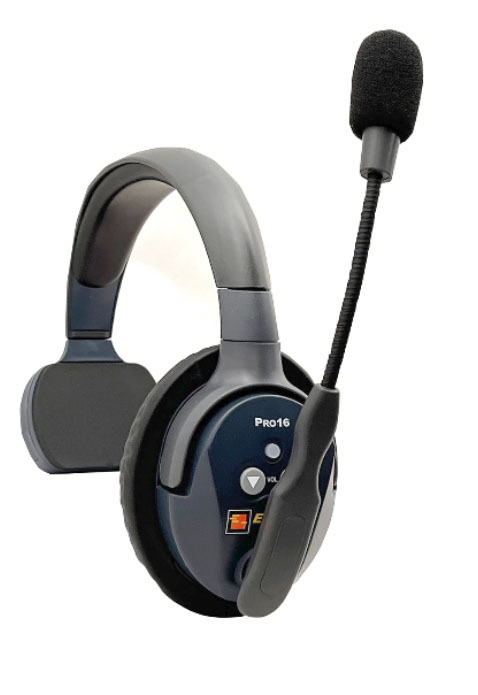
    The EARTEC PRO16 headset system provides seamless, full-duplex team communication for demanding work environments. Designed for crew coordination and safety, the PRO16 delivers clear, real-time communication without the need for a base station.

    Key Features:

    -- Supports up to 16 users in full-duplex communication
    -- Hands-free, self-contained headsets – no base station required
    -- Real-time communication with no delays or digital lag
    -- Specialty RF microprocessor eliminates voice echo
    -- Crystal-clear audio for reliable communication in demanding environments
    -- Auto-mute boom microphone mutes when placed in the up position
    -- Private communication network for secure team conversations
    -- Improves crew coordination, efficiency, and safety
    -- Designed for hard-working industrial crews

    For more information, https://eartec.com/ultralite-pro-16-headsets/

     
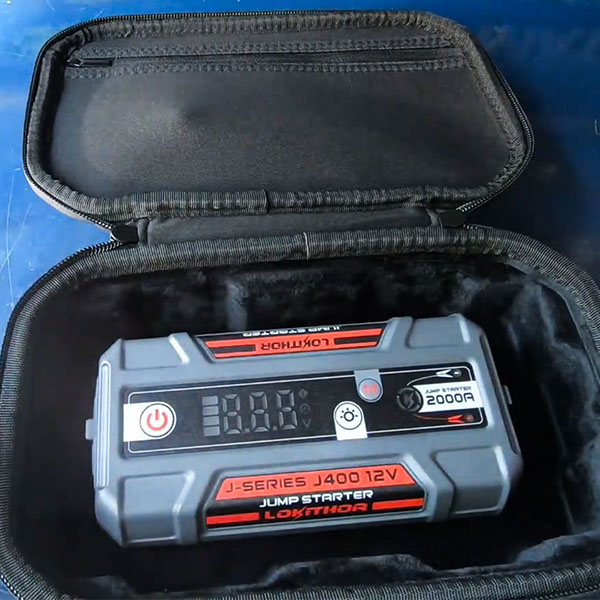
  • Lokithor J400 Car Jump Starter

    lokithorjumpstarter 40381
    LOKITHOR J400 Car Jump Starter – 2000A 12V Lithium Battery Booster

    Key Features:

    -- Powerful Engine Starting: Delivers 2000A peak current, capable of jump-starting 8.0L gasoline or 6.0L diesel engines. Provides up to 25 jump-starts on a single charge.

    -- Advanced Safety Protection: Integrated Battery Management System (BMS) and smart clamps offer 10 safety protections for secure 12V vehicle connections.

    -- Intelligent Digital Operation: CONNECTMAX technology optimizes starting efficiency. The 5.75-inch smart color display shows battery status and operational info.

    -- High-Rate Lithium Battery: Ultra-high-rate (>80C) lithium battery delivers 2.5× the discharge current of standard jump starters in a lightweight 1.5-pound design.

    -- Versatile Portable Power: 3-in-1 functionality for jump-starting, powering devices, and emergency lighting.

     
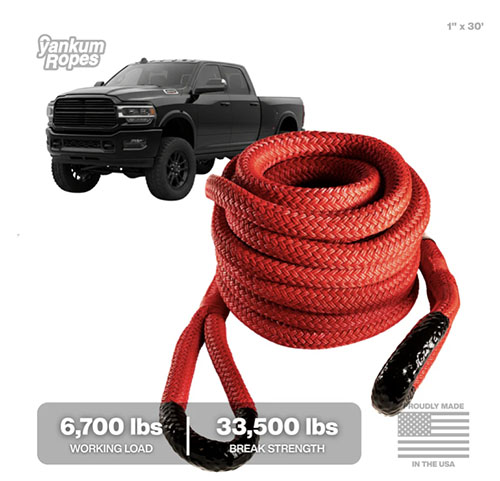
  • Kinetic Recovery Rope

    yankumkineticrope 974dc

    The Rattler: 1 Inch Recovery Rope for 3/4 -1 ton Trucks and Heavy SUVs

    Recommended for recovery vehicles that weigh 7,200 - 10,249 pounds.

    Breaking Strength: 33,500 lbs.

    Stuck? This diameter size is best utilized in anything from 3/4 ton pickup trucks to large SUV's. Why is this better than traditional flat webbing straps?

    Yankum Ropes™ delivers extra linear force and added kinetic energy that give you the power of momentum. This rope was designed for professionals but made to serve anyone who needs an extra tug. This rope was made for your farm truck to make sure you can get the job done and be home in time for supper. It’s built to stretch and perform.

    This Mil-Spec quality product is made out of the best Double Braided rope. We use our “Code Red” Polymeric coating to protect against UV, water and abrasion as well as dip the eyes in a thick, protective rubber coating to ensure extended life where it matters most. Yankum Ropes™ are designed for recovery.

    Remember to pair the recovery rope with the recovery vehicle, NOT the stuck vehicle.

    -- For use on vehicles that weigh 7,200 to 10,249 lbs
    -- Minimum Tensile Strength of 33,500 lbs
    -- WLL 6,700 - 11,200 lbs
    -- Double Braid Nylon Build
    -- Polymeric Coating
    -- Sealed Against Stain and Water
    -- UV Resistant
    -- 1 year limited warranty
    -- Made in USA

    For other sizes and more information on pricing, visit their website at https://yankum.com/products/kinetic-recovery-rope  
homediv
homediv
homediv
May 06 - May 12, 2026
homediv homediv
May 06 - May 12, 2026
  • Repo Firm Launches Legal Fund to Challenge Police Towing Directive

    Giannone Services Inc., a division of Giannone Companies Towing Enforcement, has launched a GoFundMe titled Defend Philly Repo Rights Fund to support legal costs in two lawsuits against the City of Philadelphia alleging municipal overreach in repossession enforcement.

    The company says a state case seeks to block enforcement of a police directive requiring repossession agents to transport vehicles to district stations for inspection, while a federal suit alleges civil rights violations after its chief operating officer was detained in February 2026 for refusing to comply. Giannone argues state law only requires notice to police within 24 hours and that departmental directives cannot bind private contractors.

    Since 2020 the firm has challenged the policy claiming repeated harassment detentions and vehicle misclassification as stolen despite city attorneys acknowledging legal disputes The Pennsylvania Repossession Association says officials previously agreed the directive is unenforceable but have not issued updated guidance.

    COO Carmino Giannone said the lawsuits target policy, not police officers, with the intent on clarifying limits on police involvement in repossessions nationwide. To donate to this fundraiser

    Source: https://curepossession.com
     
  • Community Supports Milwaukee Towman Shot during Repo

    The Milwaukee towing community and local residents rallied in support of Alfredo Martin, a tow truck driver who was shot while repossessing a vehicle late Dec. 29.

    Martin, 29, was shot around 11:40 p.m. in Milwaukee’s North Division neighborhood, according to police. He was taken to Froedtert Hospital in Wauwatosa, where he continues to recover.

    On Jan. 1, a line of tow trucks formed a procession outside the hospital to show solidarity with Martin and his family. Videos and photos of the procession were shared online by Milwaukee Connections Towing & Recovery LLC, along with messages wishing Martin a speedy recovery.

    A GoFundMe created to help cover Martin’s medical expenses and time away from work had raised nearly $13,000 as of Jan. 2. The fundraiser states that while Martin is expected to make a full recovery, his family faces significant medical and financial challenges ahead.

    Milwaukee police say a 23-year-old man is in custody with charges pending, and investigators are searching for another known suspect. Anyone with information is urged to contact police or Crime Stoppers.

    Source: https://www.jsonline.com  

  • Car Repossessions Surge in San Diego

    Car repossessions are rising sharply across San Diego County as more families fall behind on auto loan payments, reflecting a broader national trend. According to the Federal Reserve, 3.88% of auto loans were delinquent in the third quarter of 2025 — the highest rate since 2010 — with subprime borrowers hit hardest.

    Tow truck drivers say repossession calls have surged. Alex Alvarez of Active Recovery Services said his daily workload has jumped from two or three vehicles to as many as 10 assignments a day. Repossessions often happen quickly to avoid confrontations.

    “It has to be fast, because people will want to get in the vehicle before we hook it up,” Alvarez said.

    Construction worker Ezekiel Rodriguez said he was stunned when the car he was driving — owned by his girlfriend — was towed just days before he was set to start a new job. Without the vehicle, his ability to work is uncertain.

    Alvarez said the job comes with emotional strain.

    “This job is not easy; it’s not for everyone,” he said. “I’ve had a lot of employees come and go. They tell me the same thing — it’s not for them — but if we don’t do it, another repossession company will.”

    Source: https://www.nbcsandiego.com

     
  • Auto Loan Delinquencies Keep Climbing

    Auto loan delinquencies are climbing to their highest level since the Great Recession, signaling growing strain on American households. New data from Fitch Ratings shows subprime borrowers at least 60 days past due reached 6.65% in October 2025—the highest rate since tracking began in 1994 and above the peaks of 2008. Early-stage delinquencies are rising across all credit tiers, suggesting even stable earners are feeling the pressure.

    Several forces are driving the surge. New vehicle prices now average more than $50,000, while used cars hover around $28,000. To manage these costs, many buyers rely on 72- and 84-month loans, often carrying negative equity from previous vehicles. High interest rates—averaging above 9% for new cars—are pushing monthly payments beyond what many budgets can absorb. With wages lagging behind rising living costs, auto loans are becoming harder to maintain.

    Repossession activity is rising sharply, with analysts projecting up to 3 million vehicles repossessed by year’s end. As lenders tighten standards and consumers reassess priorities, surging delinquencies may foreshadow weakening confidence and broader economic slowing.

    Source: https://vocal.media

     
Translate Page
Contact Us
© 2026  Tow Industry Week/American Towman Media, Inc.         . .