-
By Randall C. Resch
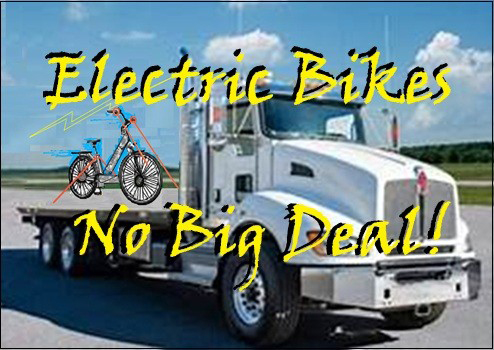
They’re the rage ’round the world—they’re everywhere! Unlike short-lived “electric scooters,” e-bikes cater to all ages for fun and no-effort sport. Recently, their popularity has resulted in increased police interaction, especially where vehicle code laws make them illegal. The problem is, e-bikes (in most states) are classified as “motor vehicles,” thus requiring driver’s licenses to operate them.
I’m an e-bike freak and often read about these high-dollar bikes that have taken the world by storm. Attractive to all age groups, you see them blasting down sidewalks, running lights at intersections, and jutting into traffic—oftentimes without warning. Especially attractive to parents, school-aged kids no longer have to be driven to school, nor do parents have to take them. Because they’re electric, they’re a “sit-atop machine” that doesn’t require “people power,” lending to a certain laziness and the creation of a community of unfit people.
Call it “stupid money”—one brand of e-bike is carbon fiber, lightweight, and capable of 60 miles per hour. These little zippers are state-of-the-art, and if you’re really dumb, the Aurumania Gold Edition boasts a $114,000 price tag—if it fits yer’ style. Ya’ can’t make this stuff up! This limited-edition e-bike features a gold-plated frame reportedly adorned with hundreds of Swarovski rhinestones, a marketing ploy attracting riders who roll in true bling style. Not in a bazillion years would most towers be able to afford a luxury machine like this, yet it’s satisfying to know just how good they look atop a carrier headed to a tow yard—with all those rhinestones blingin’ in the sun.
Kids and adults ride these tiny machines that are difficult to see, contributing to a rise in rider-versus-vehicle fatalities. Case in point: In May 2025, in Jacksonville, Florida, a tower was making an inner-city right turn when the tow truck “crossed the path” of an adult e-bike rider. The rider was killed instantly; she was not wearing a helmet. Towers, be on extra alert—these e-bikes are in the streets and on sidewalks, riding willy-nilly with no regard for traffic safety. Vehicles and e-bikes don’t mesh!
How It’s Done
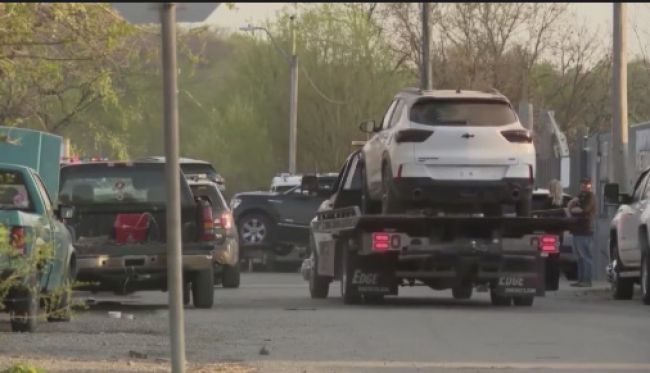
I watched a carrier operator load an e-bike atop a light-duty Pete one Saturday afternoon at the beach. The bike’s rider had been arrested for DUI, and the bike was being impounded. The tower’s process was slow and calculated—I was impressed by his skills. As the officer wrote the impound report, I found myself entertained by his actions as he retrieved a blanket from behind the truck’s seat. While preparing the e-bike in an upright load position, he strategically positioned the blanket to protect the bike from scratches.
Although securing an e-bike is similar to securing a motorcycle, without knowing anyone was watching him, he demonstrated real “wow factor,” doing an outstanding job. While experienced towers have tricks up their sleeves when loading motorcycles and the like, let this narrative serve as instruction for beginners considering these get-it-done techniques:
-- If an “e-bike” is noted in police dispatch instructions, send an experienced operator with a carrier
-- On arrival, set the tow truck’s e-brake; chock tire(s) to prevent rollaway
-- Equip the tow truck with a thick furniture-loading blanket for padding
-- Have ready motorcycle ratchet straps and soft cycle loops for tie-down
-- Tilt and set the carrier deck solidly to the pavement
-- With care not to slip and fall, roll the e-bike forward and center it against the winch fairlead roller
-- Pad and protect the e-bike at contact points to avoid strap chafing
-- Never use the tow winch for tie-down purposes
-- At destination, off-load using the same care and safety
-- Never allow the rider or owner onto a tilted carrier deck
-- E-bikes use lithium-ion, sodium-ion, or solid-state batteries; determine a safe storage location and consider fire risk
-- Release only according to vehicle code law and agency procedures
Stand By for Flak
Who knows if the laws will change, making these legal for recreational cruising? Until then, they’ll continue winding up on tow trucks headed to impound yards. Nonetheless, law enforcement is already chasing these e-bikes through inner-city streets, using newly enacted vehicle code sections to enforce impounds. If the rider is a juvenile, e-bikes can be impounded and held until released to a licensed driver.
With the “e-bike mentality” comes a sense of entitlement—suggesting rates charged for towing should be lower: “Towing an e-bike shouldn’t cost as much as towing a car.” Rest assured, e-bike owners will create headaches at the release window, especially when a “hold for release” is required by the impounding agency. Another question remains: How is a lien sale applied to e-bikes that aren’t promptly picked up?
For towers who think e-bikes are the same as a regular, good old schoolyard Schwinn—think again! These little buggers are easily damaged if operators aren’t careful during the load-and-go process. Since it’s rare (if ever) that an e-bike is impounded off the highway, take your time—work slowly and methodically to prevent damage.
Personally, the bigger picture says this: treat every load—or “e-bike dangle”—with total care, as if it were an irreplaceable, original, all-aluminum 1952 Aston Martin DB2. You bend it, you buy it!
Operations Editor Randall C. Resch is a retired, veteran, California police officer, former tow business owner and industry advocate. As consultant and trainer, he authored and teaches tow truck operator safety courses approved by the California Highway Patrol. For 57-years, he has been involved in the towing and recovery industry. In 29-years, he has contributed more than 800-safety focused articles for American Towman Magazine, TowIndustryWeek.com and POLICE Magazine. He is a frequent seminar presenter and beauty pageant judge at tow shows. In 2014, he was inducted to the International Towing and Recovery Industry Hall of Fame, was the 3rd recipient of the industry's "Dave Jones Leadership Award," and is a member of American Towman’s Safety Committee.
Email Randy at rreschran@gmail.com.
-
By Randall C. Resch
A tower’s “colorful criminal history” may be permanently disqualifying. So, what actually disqualifies a tow operator with a questionable background?
There are many tow applicants with histories that include violent crimes or other offenses that raise serious concerns. For this reason, when tow companies apply for—or renew—rotation privileges, both operators and dispatchers are required to submit applications to the contracting agency. In some cases, the result is a permanent disqualification.
Law enforcement agencies have a responsibility to prevent individuals convicted of serious crimes from being placed in positions of public trust. These typically include violent offenses such as homicide, robbery, assault, auto theft, and drug-related violations.
Tow owners carry a similar responsibility. They must conduct background checks to determine whether an applicant is fit to serve the motoring public and whether they meet the standard of “moral turpitude.”
Moral turpitude refers to conduct that is contrary to accepted community standards of honesty, integrity, and decency. In practical terms, the question becomes: is this someone the tow owner trusts to operate expensive equipment while representing the company with professionalism and integrity?
And just as importantly, how would the public feel knowing that a convicted felon with a violent history—or even a sexual offense—has been dispatched to assist a stranded family?
Full Disclosure Required
Hiring qualified personnel is one of the most challenging responsibilities in tow management, especially when building a roster or meeting rotation contract requirements. While most contracts do not dictate exact staffing numbers, companies must still ensure they have enough qualified operators and dispatchers to handle spikes in call volume.
Agency policies vary, but applicants are typically required to complete a detailed Driver Information Form. This includes disclosure of arrests, convictions, and in some cases even juvenile contacts. Once completed, the form is submitted to the “tow boss” or reviewing agency for evaluation.
For example, in California, highway patrol rotation companies must complete a specific operator form that is cross-checked against a list of disqualifying offenses. The agency reviews whether the applicant has been truthful and whether any part of their history falls under permanent or temporary disqualification guidelines.
In general, agencies maintain a structured system that identifies:
-- Certain felony convictions that result in permanent disqualification
-- Other serious offenses that may lead to suspension or multi-year exclusion
-- A history of repeated DUI offenses, which can also disqualify an applicant
-- Crimes involving violence, theft, fraud, child endangerment, or evading law enforcement
While the specifics vary, the intent is consistent: protect the motoring public and maintain trust in the rotation system.
Company Diligence
Hiring tow operators and dispatch personnel is never simple when applicants have questionable pasts. These guidelines exist to help companies avoid placing unqualified individuals in positions of public responsibility.
Owners must remember that failing to conduct proper background investigations can damage both the company’s reputation and public trust if something goes wrong.
Most applications require full disclosure of any criminal history, and honesty is critical. Providing false information to law enforcement agencies—whether verbally or in writing—can itself be a criminal offense.
In addition to the application, fingerprint-based background checks are often conducted through systems such as LiveScan and national databases. When an applicant’s record is reviewed, any undisclosed convictions or disqualifying offenses typically surface.
It is also important to understand that disqualification from one program does not always prevent employment in other areas of the towing industry. However, the responsibility for careful hiring decisions always rests with the company.
In the end, due diligence in hiring is not optional—it is essential to maintaining integrity, safety, and professionalism in the towing industry.
-
By Randall C. Resch
Confucius say, “Grasshoppa’, wrecka’ dollies might roll, yet they don’t walk!” This sentiment comes from another dismayed tower complaining a set of dollies were stolen off his wrecker. As our conversation progressed, he openly admitted he didn’t check to see if they were locked—and wasn’t sure how to handle his irate owner’s wrath.
Label me funny, but tow company procedures should require operators to make it standard practice to ensure dollies are locked after every use. So, what requirements should owners mandate to make personnel responsible for securing equipment?
When it comes to locked and secured dollies, every devil’s advocate suggests there’s no stopping determined thieves working under cover of darkness armed with a mini-Sawzall—but why cut when you can just lift and walk away?
Call the Cops
Losing dolly equipment off trucks isn’t new. Even a rocket scientist can recognize that “anything not tied down, locked, bolted in, or secured in place is easy taking.” From an investigator’s viewpoint, consider:
- Were dollies stolen—or was something else at play?
- Were they not locked or secured atop the wrecker’s stowage bracket?
- Were dolly bunks left unsecured, allowing easy liberation?
- Did unsecured dollies “bounce and launch” from trucks in traffic?
- Did a competitor help themselves to stock their trucks?
- Did a thief swipe a set and post it for sale online?
- Did an employee take them while outfitting a new truck?
- Or is a fraudulent insurance claim in the making?
What About Liability?
Imagine motorists traveling at highway speed when a tow truck drops a dolly rack into traffic, forcing vehicles to swerve. What liability exists when investigation proves the rack wasn’t secured?
Consider two real-world incidents:
A suicidal driver struck a parked Ford F-450 wrecker providing flat-tire service on a Southern California highway. At the end of the job, the tower sat in the passenger seat writing an invoice. The motorist, standing outside the open door, was struck across the face by an unsecured dolly rack. Fortunately, she survived.
In another case, a dolly rack ejected from a moving wrecker and landed beneath a following car. The vehicle skidded atop the rack, grinding to a stop in a shower of sparks. The rack punctured the gas tank, igniting the underside. If not for the quick actions of an off-duty police officer and another motorist, the driver and her son might have been burned alive.
Security Measures
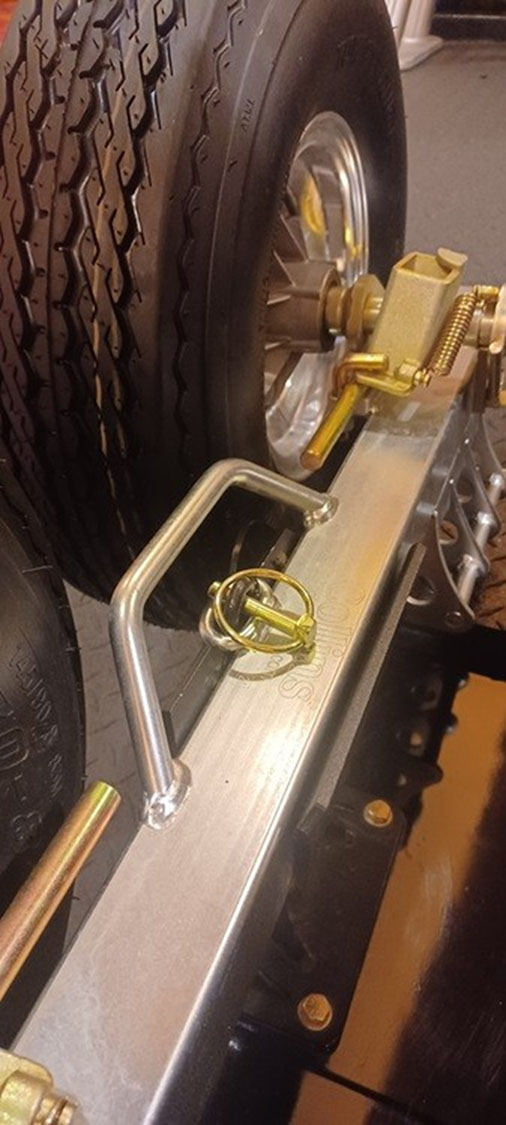
Tow owners attending shows should take a hard look at dolly rack locks. Too often, setups rely on flimsy metal loops and small locks—or simple slip pins—to secure racks.
Only a few dolly lock mounts offer superior security, and they come at a cost. Whether purchasing new equipment or evaluating existing setups, owners should think in terms of “good, better, best” security. Nothing says you can’t fabricate better securement points—but they’re only effective if used.
Engrave your company name and ID number in inconspicuous places, or paint racks distinct colors. If theft occurs, provide identifying details in your report—and monitor online marketplaces like Craigslist, Facebook Marketplace, and industry sites. If stolen dollies appear, notify law enforcement immediately.
A company’s PPM should clearly outline operator responsibility for securing dollies. When dollies go missing and weren’t locked, it becomes an employee and management issue.
Sticker Shock
If you haven’t priced new dollies lately, brace for sticker shock. A recent ad listed a full set of Collins G7 dollies (crossbars and lift handle) for $2,795. Other sets range from $1,500 to $3,500, not including shipping.
That’s a hard hit when “an ounce of prevention is worth a pound of cure.”
When trucks are parked in accessible areas, thieves can simply pull alongside and help themselves. Whether it’s a competitor or someone looking for quick cash, when dollies are stolen, the first question remains:
Were they locked?
Operations Editor Randall C. Resch is a retired California police officer, former tow business owner, and industry advocate. As a consultant and trainer, he teaches tow truck operator safety courses approved by the California Highway Patrol. With 55 years in the towing and recovery industry, he has authored more than 800 safety-focused articles and is a frequent seminar presenter. Inducted into the International Towing and Recovery Industry Hall of Fame in 2014, he is also a recipient of the Dave Jones Leadership Award and a member of American Towman’s Safety Committee.
Email: rreschran@gmail.com